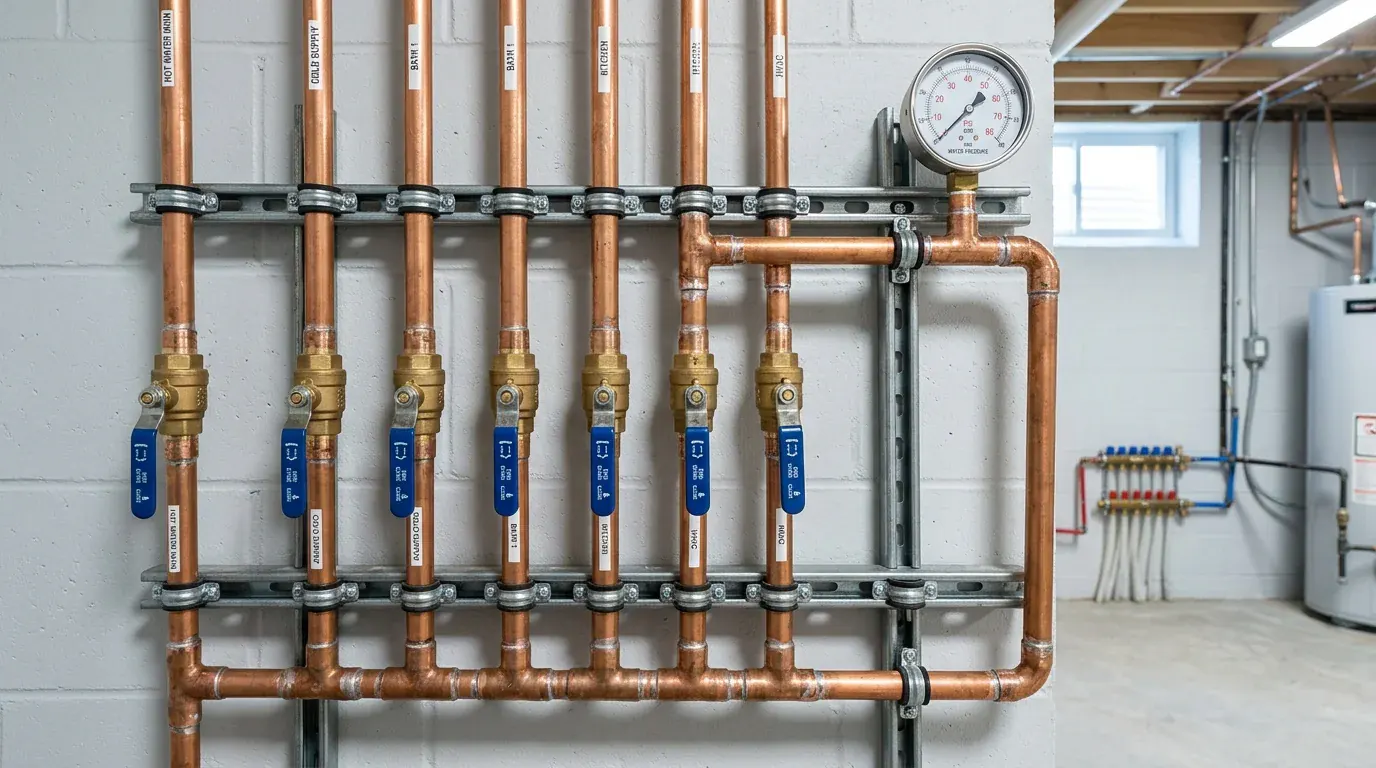
Burst pipes, clogged sewer cleanouts, and failing water heaters demand rapid troubleshooting before structural water damage worsens across Delaware. Experienced plumbers provide comprehensive leak isolation, hydro jetting, and mechanical repairs statewide.
Corrosion attacking aged galvanized steel pipes or failing polybutylene plastic lines creates persistent water pressure drops and discoloration in Delaware. Decades of mineral exposure cause galvanized pipes to rust internally, building dense iron oxide scale that chokes water flow to a sluggish trickle. Meanwhile, early plastic systems like polybutylene react poorly to municipal chlorine disinfectants, developing micro-fractures that burst unexpectedly inside ceilings and crawlspaces.
Homeowners frequently attempt temporary spot fixes on leaking pipe joints, only to face another pinhole breach a few feet down the same supply line weeks later. Patching brittle piping is an expensive short-term gamble that leaves homes vulnerable to midnight flooding catastrophes, warped subfloors, ruined drywall, and destroyed personal property in finished living spaces throughout the property.
Comprehensive repiping assessments across Delaware map out complete domestic water distribution routes through attic spaces and crawlspace floor joists. Upgrading outdated infrastructure with commercial-grade PEX-A expansion tubing guarantees clean drinking water delivery, robust multi-fixture pressure, code-compliant shutoff valves, and long-term protection against hidden pipe leaks for decades ahead.
Comprehensive Plumbing Services in Delaware
Emergency Plumbing Services: Rapid diagnostic troubleshooting, active flood containment, sewer backup clearance, burst pipe repair, and main shutoff valve replacement for urgent residential plumbing emergencies.
Drain Cleaning & Hydro Jetting: High-pressure water jetting, electronic motorized drain snaking, video camera pipe inspections, and commercial grease removal for stubborn residential and commercial drain clogs.
Water Heater Repair & Installation: Diagnostic testing of heating elements, gas control valves, thermal expansion tanks, leaking pressure valves, and complete installation of storage and tankless water heaters.
Leaving garden hoses attached to frost-free sillcocks over the winter traps residual water inside the long brass tube extending through the exterior wall. When freezing temperatures arrive, that trapped water freezes and expands, splitting the copper barrel inside the warm wall cavity. The leak remains undetected until the handle is turned on in spring, spraying gallons of water into interior wall framing. Plumbers unscrew the burst frost-free sillcock, solder in a new anti-siphon valve, and educate homeowners on disconnecting hoses before winter freezes.
Banging pipes indicate hydraulic shock waves, commonly called water hammer, caused by fast-closing solenoid valves halting high-velocity water abruptly. That sudden deceleration sends an intense kinetic shock wave bouncing back through rigid copper supply lines, stressing solder joints and loosening pipe brackets. Plumbers measure your incoming static water pressure to ensure it does not exceed 75 PSI, install piston-style water hammer arrestors beside fast-acting laundry appliances, and secure rattling pipe runs with heavy-duty rubber-cushioned clamps inside accessible framing bays.
Tightening closet bolts rarely cures base leaks and overtightening risks cracking the porcelain base, requiring a full toilet replacement. The true culprit is almost always a deteriorated wax ring seal between the toilet horn and the closet flange. Rocking toilets, uneven floor tile, or repeated plunging can blow out the airtight wax barrier, allowing foul blackwater to rot subflooring with every flush. A plumber unbolts the fixture, scrapes away old wax, inspects the flange ring for fractures, and seats a reinforced wax ring with an integrated rubber horn.
Homes built prior to the 1986 Safe Drinking Water Act amendments frequently contain 50/50 lead-tin solder along copper water pipe joints, while older brass faucets may leach trace metals into stagnant drinking water. Plumbers evaluate incoming water lines, test static water pH to identify corrosive water conditions that accelerate pipe leaching, and install multi-stage whole-home filtration systems or replace lead-bearing supply lines with modern lead-free PEX piping to ensure pristine, safe domestic drinking water for your household.
Inability to modulate shower water temperature indicates a failed pressure-balancing shower cartridge located inside the valve body behind the wall plate. These cartridges contain a delicate sliding spool that balances hot and cold inlet pressures automatically to prevent thermal shocks. Hard water minerals, sand grit, or corroded rubber seals cause the balancing spool to freeze in one position. Plumbers shut off water, pull the retaining clip with specialized cartridge pullers, flush out the brass valve casting, and lubricate and seat a new OEM cartridge.
Request a Plumber in DE
Contact our plumbing dispatch center to speak with an experienced plumber or request upfront project pricing.
Unresolved water leaks and sewer line backups compromise drywall, flooring, and household health. Contact our direct dispatch team for methodical plumbing inspections and prompt repairs.